
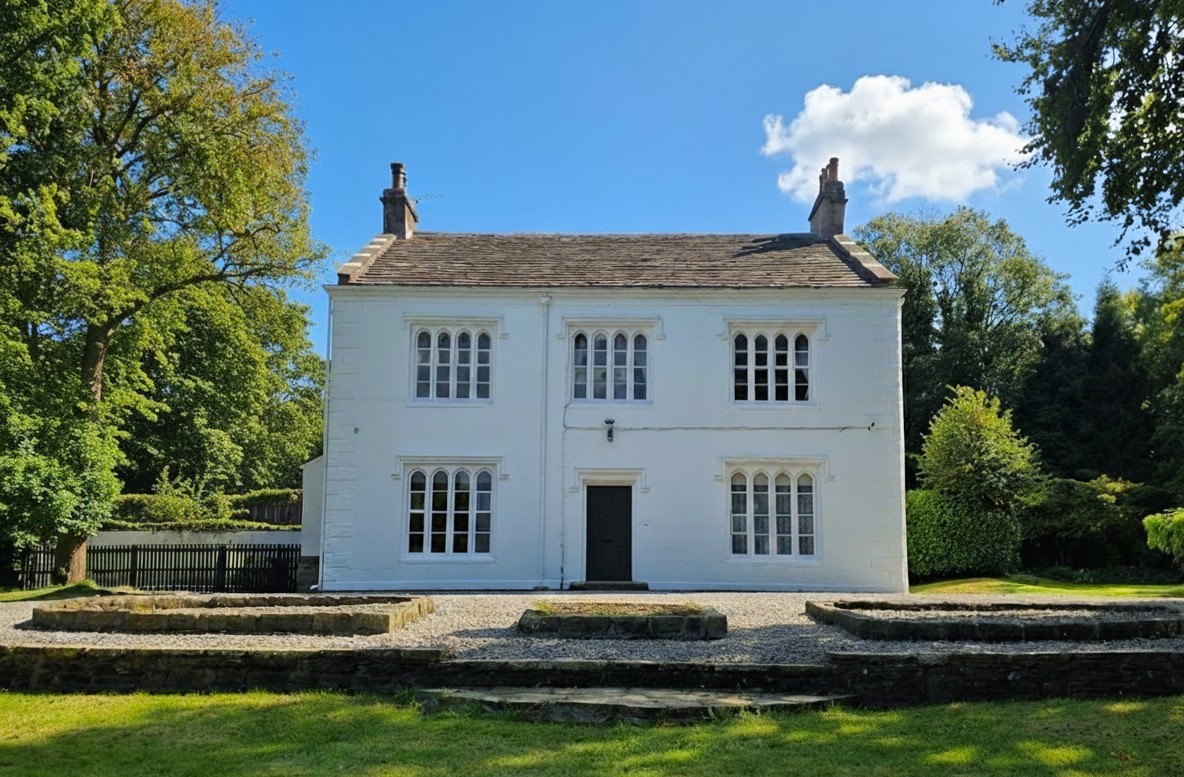
Moorside House
Moorside House is a Grade II listed period country house in Altham, set within over 1.5 acres of beautifully maintained formal gardens. The house has an intriguing history connected to the early women’s suffrage movement, with Lydia Becker spending part of her childhood at the house before becoming a pioneering suffragist.

Historic Moorside House in Altham
Built in the early 19th century, Moorside House reflects the architectural style and craftsmanship of the period. Nestled beside the Altham canal, which opened in 1810, Moorside House was strategically positioned to connect the property to the industrial heart of East Lancashire, comparable to the modern-day M62 motorway linking Leeds and Liverpool. The home enjoys views of the iconic Pendle Hill, providing a serene and picturesque setting within the Lancashire countryside.

Architectural Significance
Moorside House is celebrated for its traditional stone construction, period features, and thoughtful design. As a Grade II listed building, it has been preserved to maintain its historical integrity, including original windows, interior woodwork, and distinctive architectural details. The property represents the wealth and craftsmanship of early 19th-century Lancashire, offering a glimpse into the lifestyle of industrial families of the era. Its proximity to the canal highlights the historical importance of transport and trade links in shaping the region’s economy and society.

Historical Context
The house was built by Hannibal Leigh Becker, whose family had established a successful chemical and dye business in Altham. Moorside House served as the Becker family home for many years, providing a base for both family life and connections to the wider community. It was here that members of the family, including Lydia Ernestine Becker, spent formative years before moving to Manchester. The property’s association with prominent local figures adds to its cultural and historical value, linking it to both Altham’s industrial heritage and national history.

Inside Moorside House
The interior of Moorside House combines period character with thoughtful modern improvements. The drawing room and sitting room feature large panelled mullioned windows and striking two-toned marble fireplaces. The lounge is enhanced by six hand-painted floral panels, believed to be the work of Lydia Becker herself. A bespoke kitchen, snug, and library provide comfortable modern living spaces, while the staircase leads to a spacious landing on the first floor.
The property offers substantial accommodation, including a master en suite with dressing room, four additional bedrooms, and a self-contained flat complete with bedroom, lounge, kitchen, and bathroom.

Outside Spaces
Moorside House is surrounded by formal gardens with well-kept lawns, flower borders, and dedicated rose gardens. A traditional ha-ha separates the property from adjoining farmland, creating a sense of seclusion while retaining open countryside views. The combination of landscaped gardens and pastoral surroundings adds to the property’s charm and appeal.
